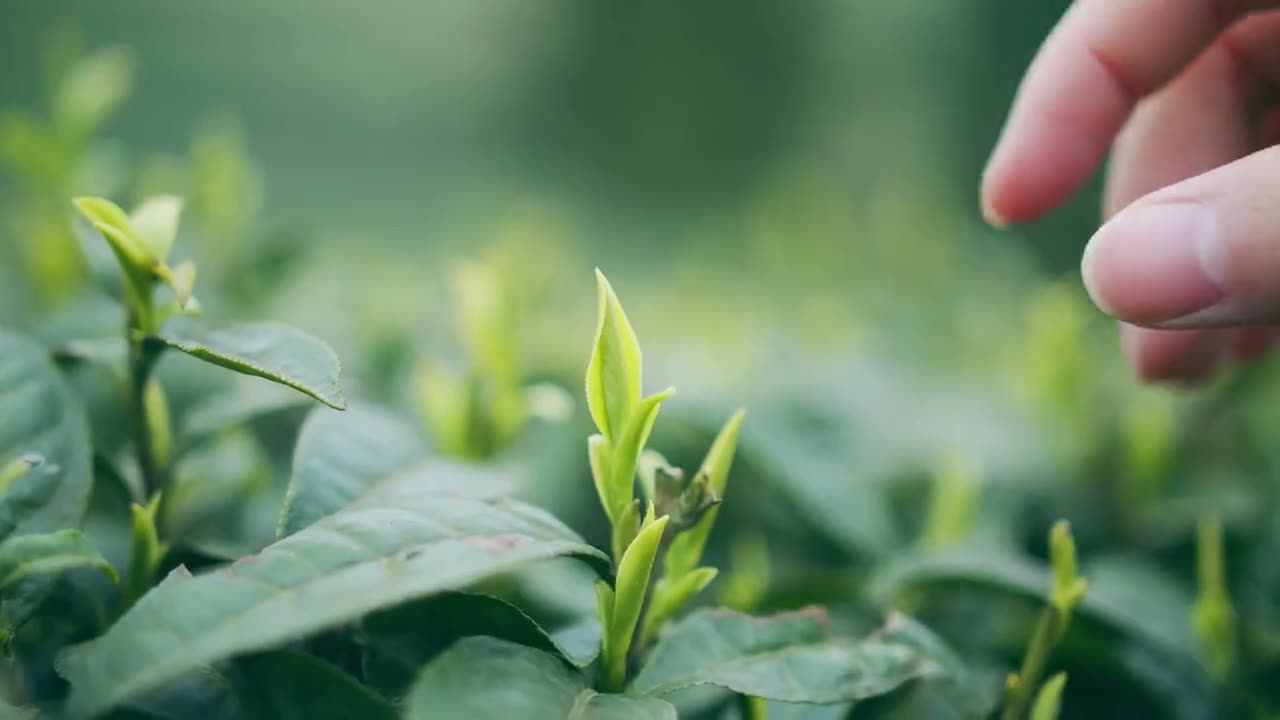
White tea has the shortest process of any Chinese tea: pluck, wither, dry. There is no fixation and no rolling, so the maker's control is limited to the plucking standard and the wither. That is why Bai Hao Yin Zhen, Bai Mu Dan, Gong Mei and Shou Mei are separated by what was picked, not by what was done to it afterwards.
The steps
Plucking
Plucking to standard01
Pluck to standard
Single unopened buds for Bai Hao Yin Zhen; one bud with one to two leaves for Bai Mu Dan; one bud with two to three leaves for Gong Mei; mature leaf for Shou Mei. The grade is decided here.
Withering
Withering trays02
Wither
Leaf is spread thinly on trays or troughs and left to lose moisture slowly, indoors or under shade, for a period set by weather and leaf. This is the only stage where flavour develops, and it is entirely weather-dependent.
03
03
Dry
Low-temperature drying brings moisture down to the trade specification of at or below 7.0% and stops the wither. Over-drying flattens the cup; under-drying shortens shelf life.
04
04
Sort and pack
Loose leaf for immediate sale, or pressed into 100 g, 300 g and 350 g cakes for storage and ageing. White tea can be aged when kept dry and odour-free; age changes the flavour rather than guaranteeing quality.
White tea — what the contract must state
Clause
Specification
Grade
By plucking standard: Yin Zhen, Bai Mu Dan, Gong Mei or Shou Mei
Origin
County — Fuding (Ningde) or Zhenghe (Nanping), Fujian
Harvest window
Spring for Yin Zhen and Bai Mu Dan; later flushes for Shou Mei
Moisture
≤ 7.0%
Format
Loose, or cake at 100 g / 300 g / 350 g
Residue standard
Named by destination jurisdiction
01
Guide
Where is white tea demand concentrated?
White tea demand is concentrated in specialty channels in Russia, North America and East Asia that buy by origin name, rather than in the bulk trade. Plucking standard and origin decide the price there more than weight does. The process needs no fixation or rolling machinery, which opens white tea to smaller Fujian gardens.
Frequently asked
Is white tea fermented?
No. It undergoes minimal natural oxidation during the wither but is not fermented, and it is classified with green tea under HS 0902.20.
Why is white tea so dependent on weather?
Because the wither is the only stage where flavour develops and it is done with ambient air. A wet week during the spring flush changes the whole crop.
Is white tea made from a different tea plant?
Usually no. White tea, green tea, oolong and black tea all come from Camellia sinensis; category differences mainly come from plucking standard and processing. Cultivar still matters and some are preferred for particular styles. A product specification should name the tea type, grade and origin rather than implying a separate white-tea species.
What should finished white tea look like?
Appearance depends on grade and style. Bud grades may show many silvery hairs, while leaf grades contain larger green, brown or olive leaves. Uniformity, intact material and absence of abnormal moisture or foreign matter are more useful checks than demanding one colour. Evaluate appearance together with aroma, liquor and the written grade standard.
Why is white tea called white?
White tea is named for the fine white down covering its young buds, called bai hao, “white hair”. The dry buds look silvery white; the brewed tea is pale gold, not white.
Is white tea black or green tea?
Neither. White tea is its own category, the least processed of all: it is withered and dried without the heat fixing of green tea or the full oxidation of black tea. It comes from the same plant, mainly from Fuding and Zhenghe in Fujian.
Is white tea the same as white sage or chamomile?
No. White tea comes from the tea plant, Camellia sinensis, and contains caffeine. White sage and chamomile are different plants used for herbal infusions and contain no tea.
How is the Chinese name for white tea read?
In Chinese it is read bai cha; in Japanese it is usually read hakucha. Both mean white tea, the Fujian category of withered, dried tea.