Black tea is fully oxidised. Fresh leaf is withered, rolled to break the cells, left to oxidise until the leaf turns copper-brown, then dried. It was invented at Tongmu inside Wuyishan, Fujian — Lapsang Souchong is the first black tea on record — and the Fujian congou method that followed, seen in Tanyang Gongfu from Fu'an, is the ancestor of orthodox black tea worldwide.
Les étapes
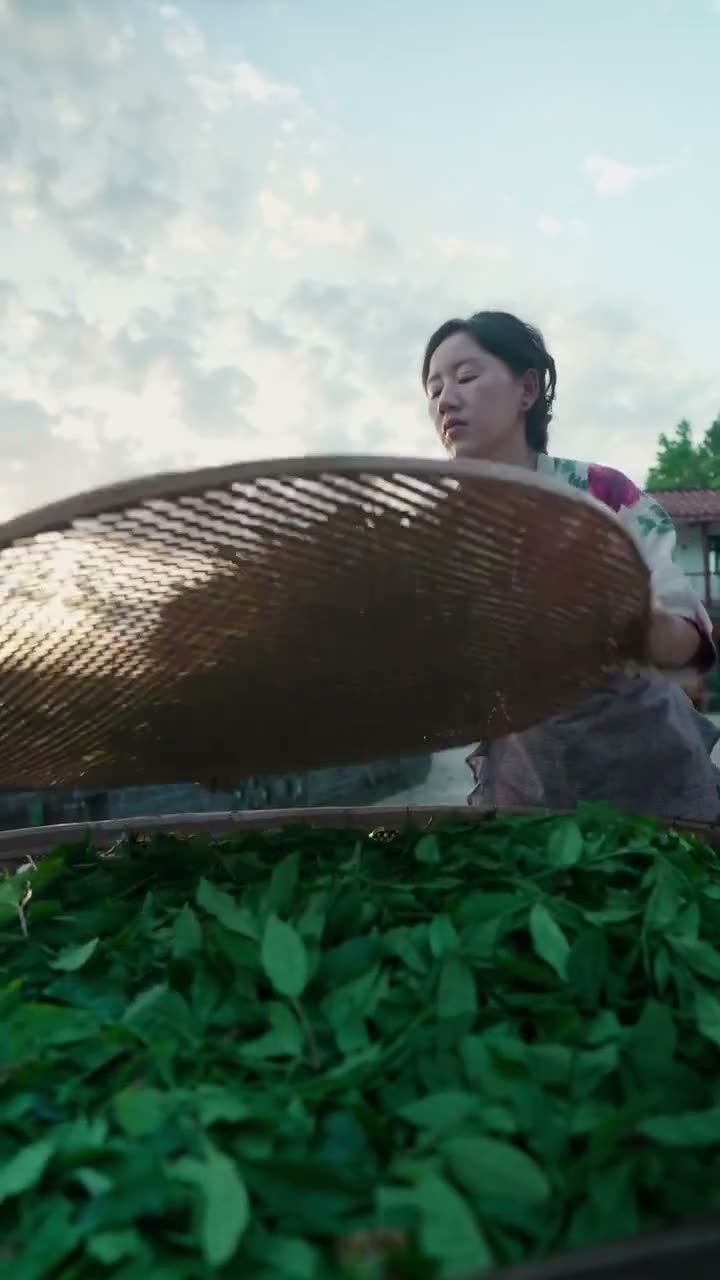
Withering
Withering at dusk01
Avec
La feuille perd de l'humidité et devient suffisamment souple pour rouler sans se briser.
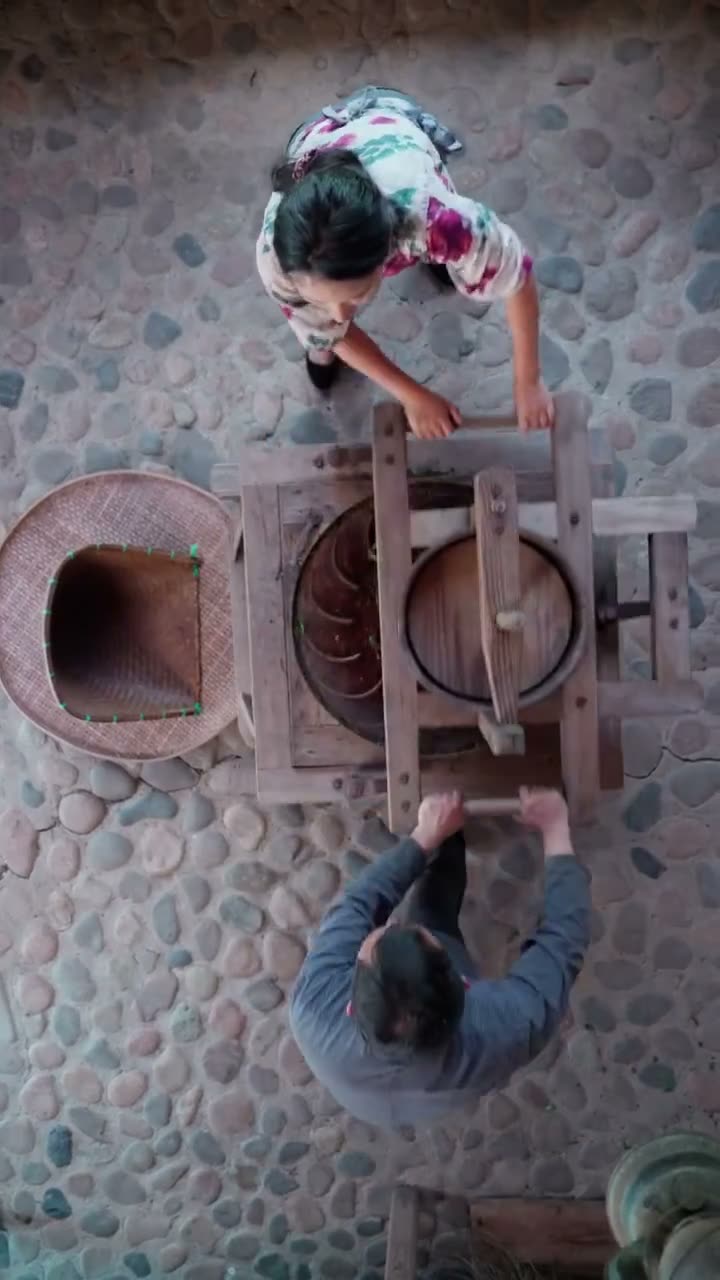
Rolling
Rolling02
Rouleau
Le roulement déchire les cellules de la feuille et rassemble les enzymes et les jus, commençant l'oxydation.
03
03
Oxydation
La feuille laminée repose dans une pièce humide jusqu'à ce qu'elle devienne brune en cuivre. C'est là que la couleur et le caractère du thé noir se forment.
Régis
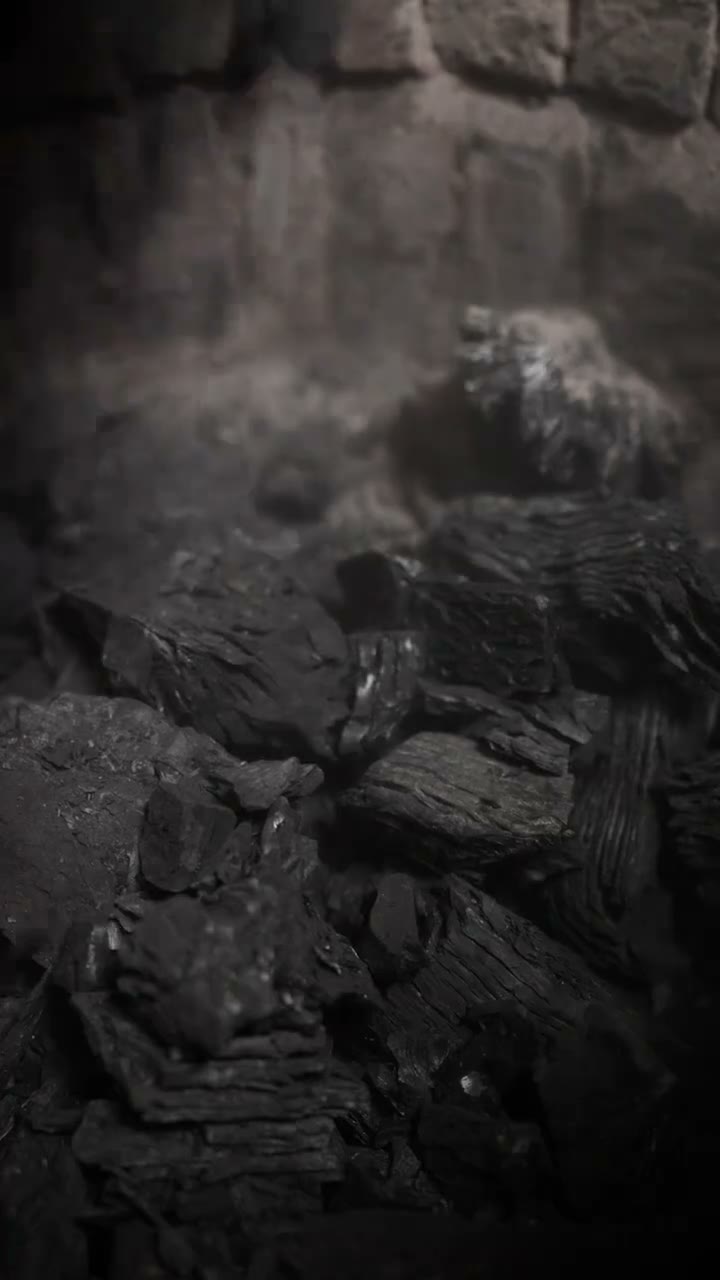
Drying over charcoal04
La sécheresse
Heat stops oxidation and brings moisture down to at or below 7,0%. Traditional Tongmu Lapsang Souchong is dried over pine smoke; the unsmoked version is dried without.
Sorting
Sorted lots05
Sort et grade
Le thé noir Fujian est classé par son nom et son extrait Jin Jun Mei est seulement à boutons plutôt que par les lettres orthodoxes utilisées pour le thé indien et ceylonien.
Thé noir Fujian
Le thé
Origine
Notes
Lapsang Souchong
Tongmu, Wuyishan
Le premier thé noir enregistré; fumé ou non fumé préciser
Jin Jun Mei
Tongmu, Wuyishan
Pluck à boucs uniquement; pointe dorée
Tanyang Gongfu
Fu'an, Ningde
Le style Congou; le noir historique Fujian à l'exportation
01
Guide
Où le thé noir chinois pousse-t-il ?
Central Asia. Black tea into Uzbekistan more than doubled year-to-date in 2025 by an industry count, and total Chinese tea into Uzbekistan reached 29 217,4 tonnes for the year, up 17,3%. Fujian congou styles answer that demand. Black tea was USD 28,05 million, or 9,18%, of Fujian's export value in 2023.
02
Why did black tea appear, and why is it linked with Britain?
Black tea emerged in the Wuyi mountains of Fujian, where fully oxidised tea such as Lapsang Souchong was being made by the seventeenth century. It kept its flavour on long sea voyages better than green tea, and as British demand grew it became the tea of the British market.
In the nineteenth century Britain established tea plantations in India and Ceylon, now Sri Lanka, which is why Assam and Ceylon are so closely associated with black tea today. Chinese black teas such as Lapsang Souchong, Jin Jun Mei and Tanyang Gongfu remain the style’s original source.
Questions fréquentes
Où le thé noir a-t-il été inventé ?
Tongmu, à l'intérieur de la zone Wuyishan de Fujian, en Chine.
Le thé noir est-il fermenté ?
Dans le langage professionnel, oui HS heading 0902 l'appelle fermenté.
Pourquoi l’appelle-t-on thé noir si la liqueur peut être rouge ?
Le nom anglais renvoie surtout à la feuille transformée foncée, tandis que la terminologie chinoise décrit couramment la couleur rouge de l’infusion. Les deux peuvent désigner la même grande catégorie. Dans les documents commerciaux, utilisez le nom reconnu à destination et ajoutez le grade ou le style d’origine pour éviter l’ambiguïté.
Comment la transformation distingue-t-elle le thé noir du thé vert ?
Le thé noir s’oxyde largement avant le séchage, tandis que le thé vert est chauffé tôt pour limiter l’oxydation. Cette différence change couleur, arôme, goût et comportement au stockage, même si cultivar et finitions comptent aussi. Pour comparer, gardez constants le grade des feuilles et l’infusion au lieu de regarder uniquement la couleur.
Is black tea an herb, and is mate black tea?
Black tea is not an herb: it comes from the tea plant, Camellia sinensis, the same plant as green and white tea. Yerba mate is a different plant, Ilex paraguariensis, so mate is not black tea, though both contain caffeine.
What does black tea look like?
Dry black tea is dark brown to black, as twisted whole leaves, fine tippy leaves with golden buds, or small granules in CTC tea. Brewed, it is red-brown to deep amber.
What is black tea in Morocco and Egypt?
In Egypt, black tea is the everyday tea, usually brewed strong and sweet, sometimes with mint. In Morocco the national drink is mint tea made with Chinese green tea, and black tea is a much smaller part of the market.
Why is black tea called red tea in Japanese as well as Chinese?
Japanese names it kocha, “red tea”, for the same reason Chinese calls it hongcha: both name the tea after the red-brown colour of the brewed liquor, while English names it after the dark dry leaf.